
How to Take Stakeholder Capitalism To The Stratosphere
Sixteen years ago, Bill Roark co-founded Torch Technologies, a technical services provider for the U.S. Defense Department. His mission was to create a company where every employee shared in its growth and success. The result is a $350 million, 100% employee-owned company. Here’s how he did it.
A Tough Lesson Learned
Bill’s path to creating an employee-owned company began with a failure. He tells the story of a company that he worked at for many years, working his way from an entry-level job to finally running one of their six business segments. The company was supportive of using incentivized goals as part of its business strategy. All went well until the company was acquired.
The new parent company was not impressed by this method and put the kibosh on both present and future commitments of this type. Bill found himself in a very tough position.
“The minute that acquisition closed, the ability to [..] follow through with those commitments became very difficult,” Bill describes. “I was in a new environment where I had very little influence to make [the promised incentives] happen.”
Bill decided that he’d rather move on, and spent some years exploring other business opportunities before co-founding Torch Technologies with business associate and former coworker, Don Holder. This time around there would be no stopping Bill from using his incentive-based strategy to grow Torch Technologies.
Riding the Rocket of Success
Using a combination of stock options and bonuses tied to specific goals, Torch Technologies quickly experienced massive growth. They first made the Inc 5000 list in 2007, five years after the company started. It was right around that time that Bill and his cofounder, Don, were able to massively shift Torch Tech towards becoming a fully employee-owned company.
Don was already planning his retirement when he co-founded Torch Technologies. Normally that means finding a buyer for the founder’s shares. But with their commitment to putting ownership into the hands of their employees and with an ESOP (Employee Stock Ownership Plan) already in place, Bill and Don took that golden opportunity to put those shares into the hands of their workers.
“We were able to purchase the shares back from Don and [we] redistributed them to other employees.”
Over the years Bill continued to make annual contributions to the ESOP until in 2012, Torch Technologies finally achieved their goal of becoming a 100% employee-owned company. And their growth has reached the stratosphere.
Torch Technologies has been named an Inc 5000 honoree every year since it debuted in 2007 for a whopping twelve-year total. They have over 800 employees and in 2017 hit nearly $350 million in revenue. Bill’s commitment to sharing the success of his business with his employees has shown what a remarkable leader he is and how well he understands stakeholder capitalism.
A Leader in Stakeholder Capitalism
Bill calls it “progressive engagement.” At our Fellowship weeks, I call it stakeholder capitalism – the implementation and measurement of how invested a company’s “stakeholders” are. That includes employees, who tend to work best when they feel that they have some ownership over what they’re doing. Bill’s incentivized business strategy and his eventual shift to an employee ownership model proves his deep understanding of how stakeholder capitalism works and how to help people create success for themselves, and by extension, the company.
“In essence [employees] do a good job for the customer, and, as [they] do a good job, the business will grow.”
I couldn’t have said it better. Bill’s a great leader at helping to define how and employee-owned business model and business growth work together in a virtuous circle. So perhaps it’s no surprise that once we got our hands on him, we wouldn’t let him go.
Joining our Board of Experts
Bill and I got to know each other very well after he went through a Birthing of Giants Fellowship week at Duke University in 2017, an experience that made a lasting impression on him.
“It’s always just absolutely fun to spend a few days with entrepreneurs, locked in a room together. No matter how many times you do it, it’s always special, because [..] you realize, we may have different businesses, but when it gets down to it [..] there’s so much to learn from each other.”
We were grateful to have him as a Fellow. His understanding of how to keep employees engaged along with his generosity in sharing both his successes and “hiccups” made him a valuable addition and a natural mentor. In fact, we were so impressed that we invited Bill to join our Board of Experts. We’re thrilled to have him here providing great guidance to the entrepreneurial community.
The Birthing of Giants Fellowship Program is a gathering of business owners of fast-growth companies focused on advanced education via strategy-planning programs led by a team of leading entrepreneurs in American business. We help you implement proven strategies for sustaining and enhancing business growth.
fellowship program
A unique community designed to help entrepreneurs scale their businesses through mentorship, workshops, and networking.
Ready to elevate your business?
See if you qualify to join our exclusive community of business owners.
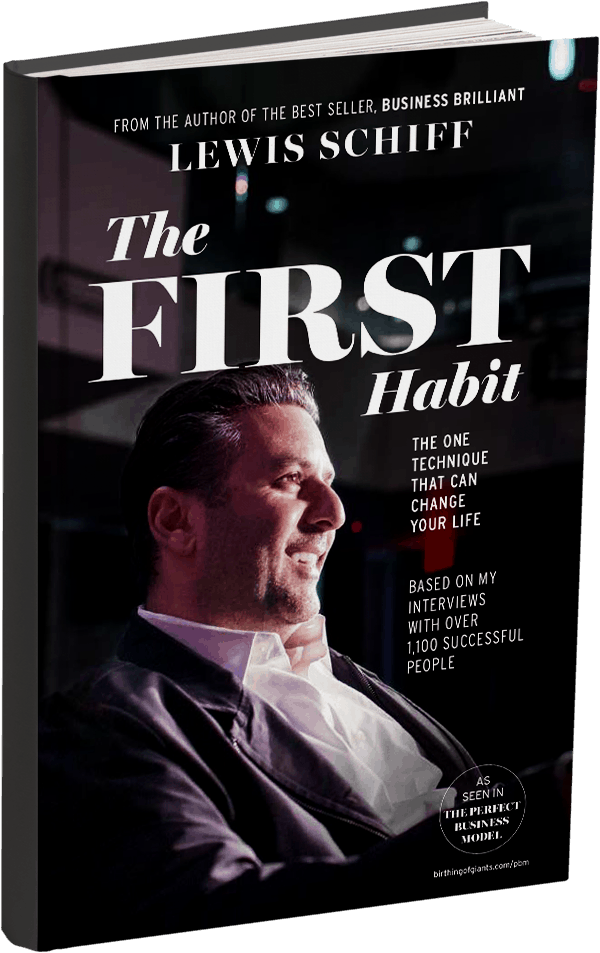
the first habit
The First Habit by Lewis Schiff emphasizes the importance of setting clear goals and taking action to achieve them. It encourages readers to define their vision,create a plan, and stay focused on their objectives.
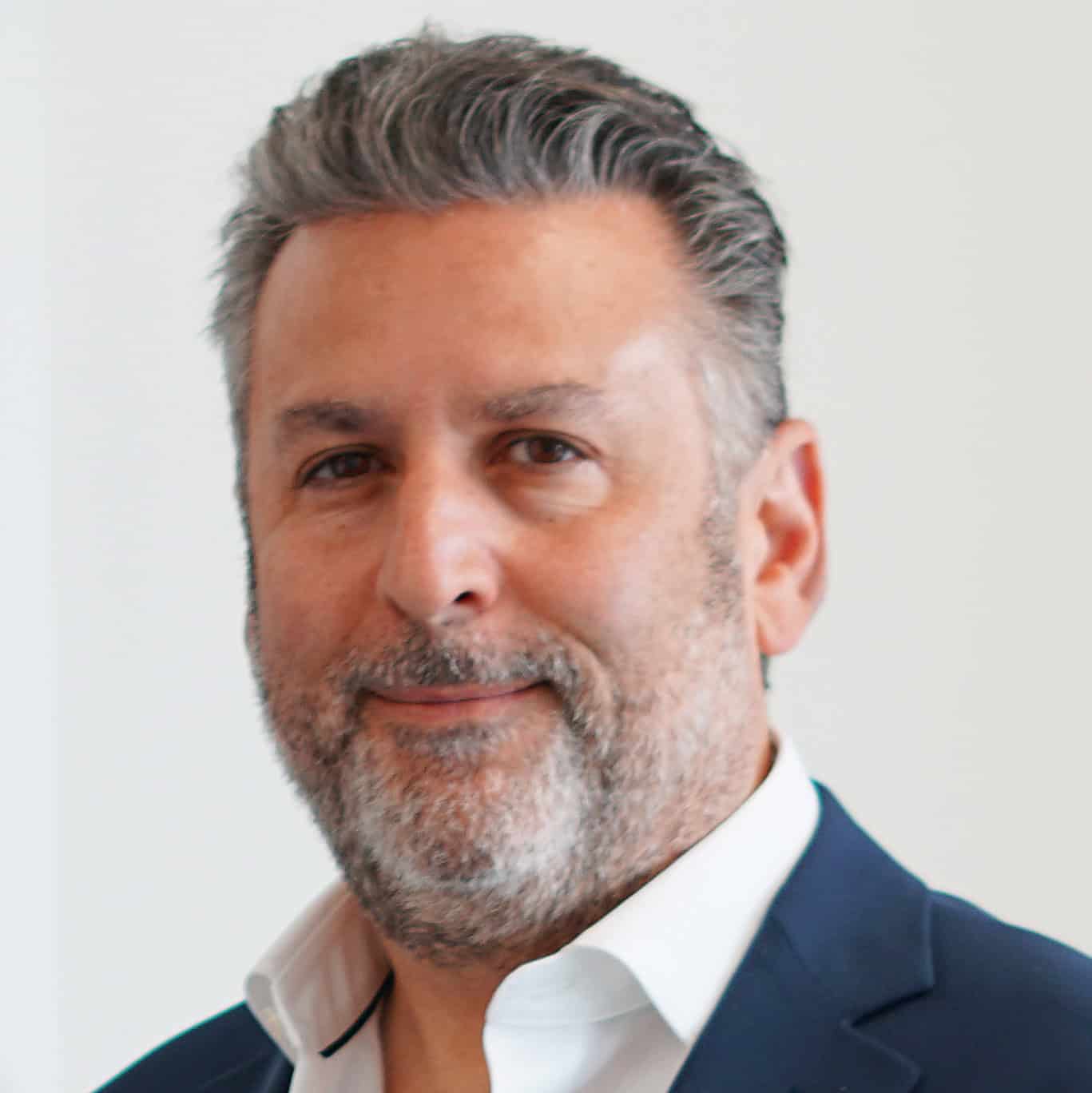
About the Author
Lewis Schiff is the Chairman of the Board of Experts for Birthing of Giants and the Executive Director for Moonshots & Moneymakers. He is the author of several books on success and a columnist for Forbes and Worth Magazines.
